Start when there is a meaningful decision to make
The right time to begin admissions support depends on the student’s stage and the work that would benefit from guidance. Earlier support can create room for exploration and development. Later support can still help with prioritization, research and communication. Neither timing is useful if the program is built around pressure rather than a clear need.
Look ahead to the next consequential decision: course selection, a summer commitment, a testing plan, a college list or an application deadline. If the student lacks the information, perspective or habits to approach it well, a conversation may be useful now. If they are progressing confidently with good existing support, there may be no reason to add an intensive program immediately.
Different stages call for different work
| Stage | Productive focus | A common mistake to avoid |
|---|---|---|
| Before high school | Curiosity, learning habits and a healthy transition | Turning childhood interests into a fixed admissions identity |
| Ninth and tenth grade | Academic foundations, exploration and meaningful commitments | Accumulating activities without learning what fits the student |
| Eleventh grade | Priorities, evidence, testing plans and university research | Delaying every strategic decision until essay season |
| Summer before the final school year | A researched list and a plan for each application component | Starting with polished sentences before deciding what the application needs to communicate |
| Application season | Accurate evidence, realistic deadlines and clear writing | Trying to create a new profile instead of presenting the existing one thoughtfully |
Choose the work that fits the student’s stage before deciding how much support to add. The same application deadline can call for very different preparation depending on what is already in place.
Put the guide into practice
What is the next decision on your calendar?
Choose the work ahead, then consider the time needed to do it thoughtfully.
01Explore an interest
Allow time for an appropriate experience and reflection afterward. The purpose is to learn whether the work fits, not to commit to a permanent identity.
02Choose priorities for the coming year
Review academic demands and current commitments before adding more. Establish what the student can realistically sustain.
03Build a college list
Research programs, access to opportunities, environment and practical constraints. Leave time to connect those findings to the student’s goals.
04Finish applications
Inventory deadlines and incomplete essentials. Prioritize accuracy, coherent evidence and meaningful revisions over attempting to invent a new profile.
Before high school: protect exploration
Young students benefit from opportunities to read, try things, ask questions and develop habits. They do not need every interest to become a credential. If guidance is sought at this stage, it should support the transition and the student’s confidence rather than prescribe an elite university destination years in advance.
Families can pay attention to how the student responds to challenge, manages frustration and asks for help. A useful adviser may help the family understand available school choices or support a specific developmental need. The scope should reflect the student’s age and readiness.
Ninth and tenth grade: create room to learn
These years offer time to test interests and build academic foundations. The student can explore a question, participate consistently and discover whether they enjoy the actual work behind an attractive subject or career. They can also learn how to manage commitments before the application calendar becomes demanding.
Guidance is especially useful when the student is overloaded, choosing activities mainly to impress others or struggling to translate curiosity into action. A mentor can help narrow the next experiment, identify accessible opportunities and reflect on what the experience reveals.
The goal is not an unchangeable plan. It is a better process for making choices. A student who discovers that an early interest is not a good fit has learned something valuable, provided there is time to respond thoughtfully.
A practical strategy for ninth and tenth grade
Eleventh grade: set priorities and research universities
By this stage, academic choices, testing, activities and university research increasingly affect one another. The student needs to understand what their existing work demonstrates and where a manageable change could still matter. Adding a new commitment should be weighed against finishing something already meaningful.
Begin university research with questions about programs, learning environments, costs and opportunities. A list built only from reputation often leaves the student unable to explain why a particular institution fits. Research takes time because facts need to be connected to the student’s own goals.
Testing plans should also account for preparation time and current institutional requirements. Policies vary and can change. Verify requirements directly with each university for the relevant cycle rather than treating an old general rule as a decision for every school.

From The Ivy Journal
The Research University Trap: Why a Famous Lab Is Not College Strategy
Read the article
From The Ivy Journal
Lower Test Scores Can Still Strengthen Your College Application.
Read the articleThe summer before applications: plan before polishing
This is a useful period to inventory experiences, gather accurate details and decide what the different application components need to communicate. Students can explore essay ideas without the pressure of every school deadline arriving at once.
At The Ivy Centre, Application Architecture gives each part of the application a purpose. If the personal statement already explores one experience, a supplement may need to reveal another dimension. Planning the whole application first can reduce repetitive writing and unnecessary revisions later.
The college list also needs practical scrutiny. Check program requirements, affordability considerations, deadlines and the work each application will require. A very long list is not automatically a stronger strategy if it reduces the attention given to every submission.
During application season: be realistic about what can change
Late support can help a student identify missing context, improve organization, research a university more carefully or communicate existing evidence clearly. It cannot recreate years of academic performance or authentic experience in a few weeks.
The first task is triage. Establish fixed deadlines and requirements, identify incomplete essentials and decide which revisions are most consequential. A student should not spend the final days endlessly polishing one essay while another application remains structurally incomplete.
Ask a prospective adviser about availability, turnaround and what can reasonably be delivered in the time remaining. A responsible recommendation may involve reducing scope. Clarity about limits is more useful than a promise to transform everything at once.
If you have already submitted
The work may shift to remaining applications, interviews, requested updates, decisions and comparison of offers. Follow each university’s instructions about additional material. More communication is not automatically better, and an update should contain relevant information rather than repeat enthusiasm without substance.
An unexpected result may also prompt reflection about the remaining strategy. It should not trigger a rushed reinvention of the student’s identity. Review the actual evidence, the list and the available options. Good guidance helps the student respond thoughtfully while preserving perspective.
When should graduate applicants begin?
Graduate pathways often involve preparation that begins well before writing an application. A prospective STEM PhD student may need to clarify research direction and understand potential academic environments. Medical school preparation involves the requirements and experiences relevant to the system being considered. MBA applicants need to examine professional progression, leadership and the reasons for the degree.
The Ivy Centre supports these pathways, with guidance appropriate to the applicant’s stage. Starting early is useful when it creates time to build or test relevant experience. It should not mean buying years of support without a clear plan for what that time will accomplish.
A master’s applicant may be choosing between taught and research degrees, addressing prerequisites, or connecting a degree to a professional goal. That work also benefits from time to investigate programs and test assumptions. Begin when guidance can change a meaningful decision or strengthen preparation, not simply when the application portal opens.
How we decide where to begin
Our founders first consider the student’s current situation, the decisions approaching and what the family hopes to gain. The Student Insight Report and Personal Program Blueprint help connect that understanding to practical priorities. Programs can begin at different ages and last from a few months to multiple years, depending on the student’s timeline and needs.
Explore how the framework adapts to the student
A useful action this week
Write down the next three decisions the student faces, when each needs to be made and what information is missing. Identify which can be addressed through school resources or independent research and which might benefit from additional guidance. This gives a first consultation a practical purpose.
The best starting point is not simply “as early as possible.” It is early enough to do the work that matters, at a level of support the student is ready to use.
See the strategy in practice
Find the next step that fits your stage.
The masterclass explains how to assess what can still change and choose where your effort belongs.
Full masterclass included with free and immediate access
Explore the 15 chapters
Free with masterclass 00:0001What does a strong application actually need?
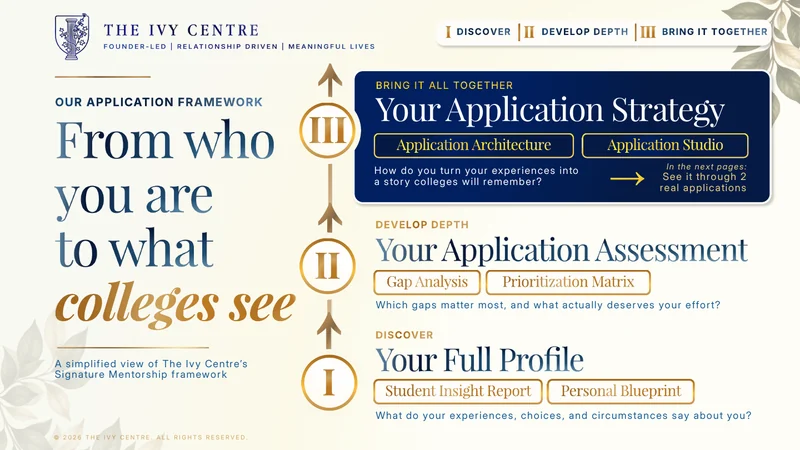 06:3502The five stages of every strong application strategy
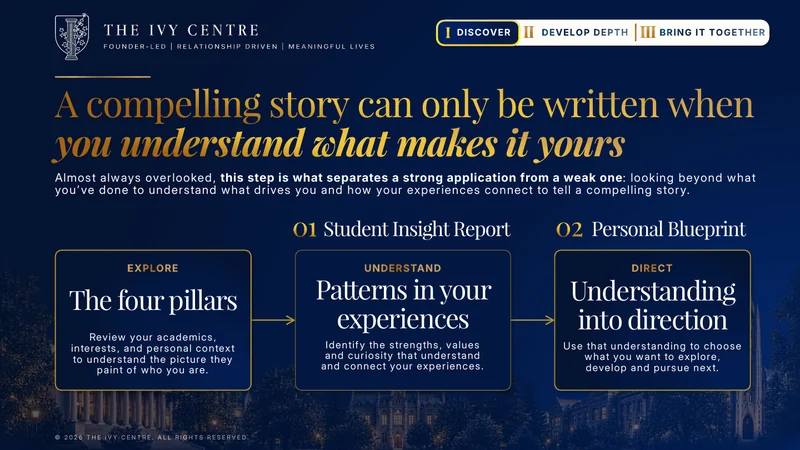 09:2003What makes you memorable to admissions officers?
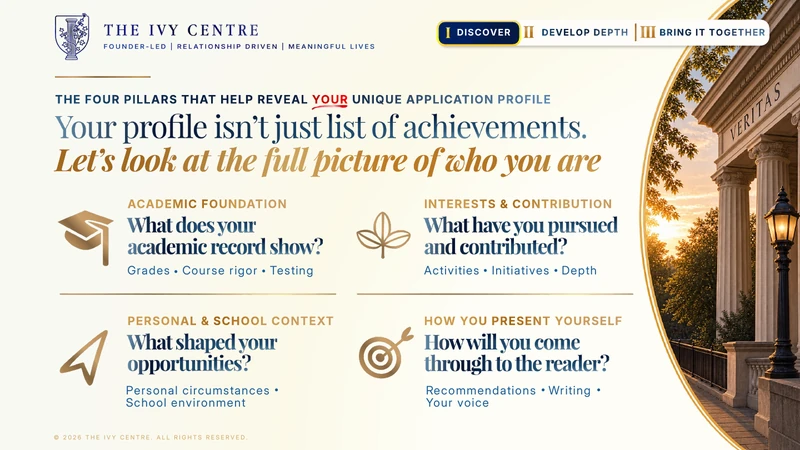 10:4504The four pillars behind every student profile
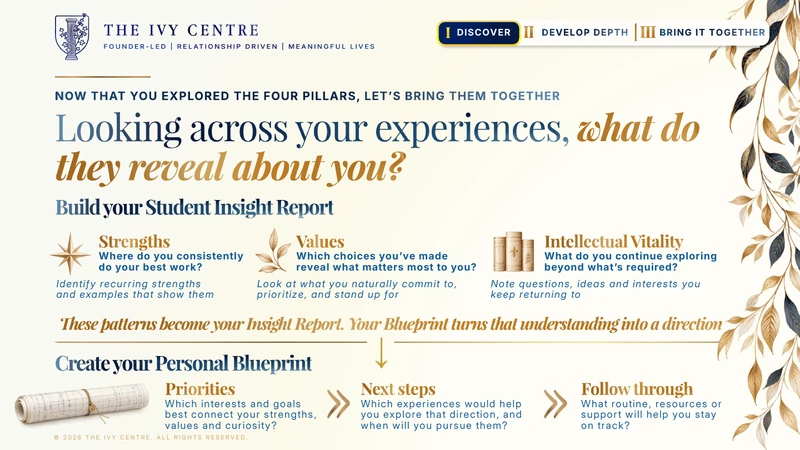 12:2705Turn your strengths, values, and curiosity into direction
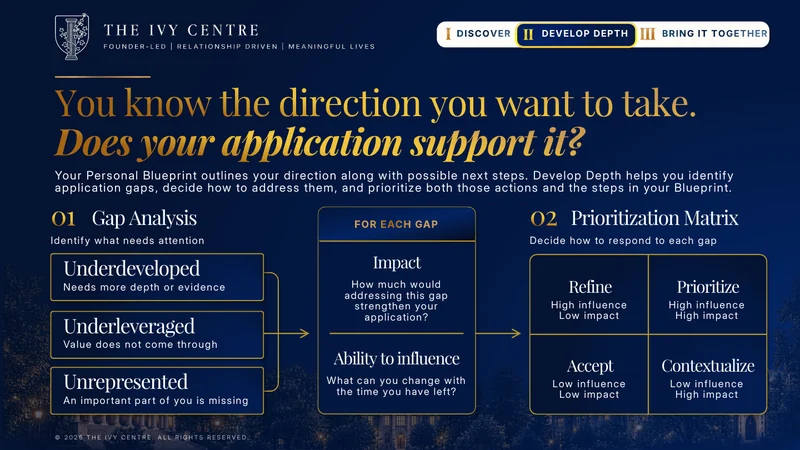 13:5306What is your application actually missing?
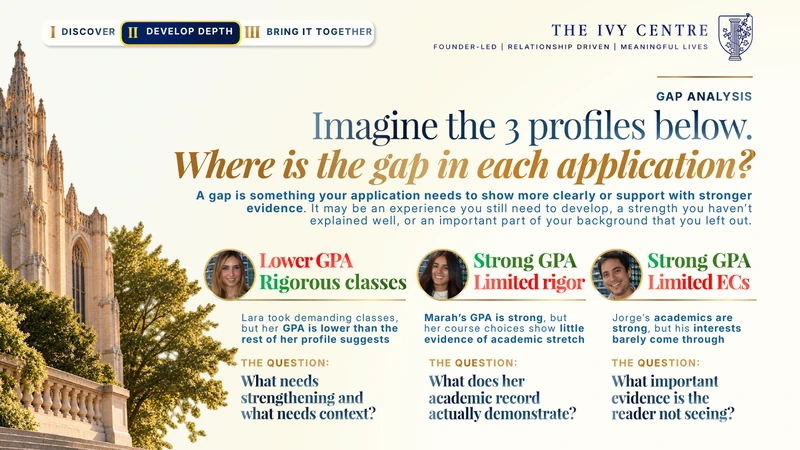 15:2607How to spot weaknesses in your college application
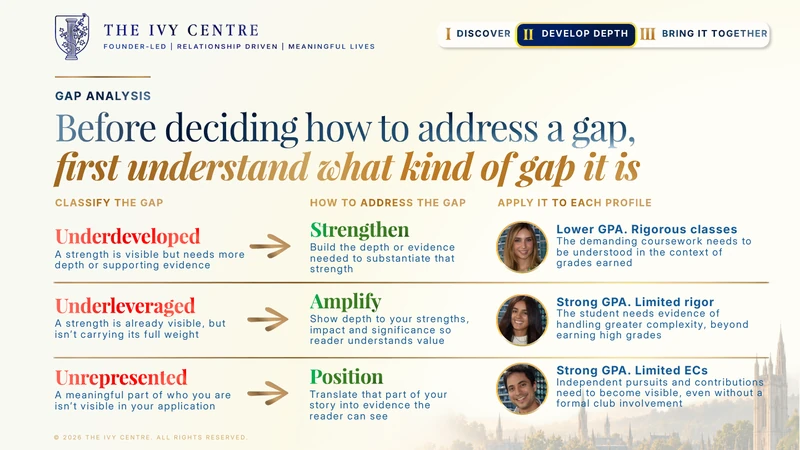 17:0108There's only 3 types of gaps. Each with a different way forward.
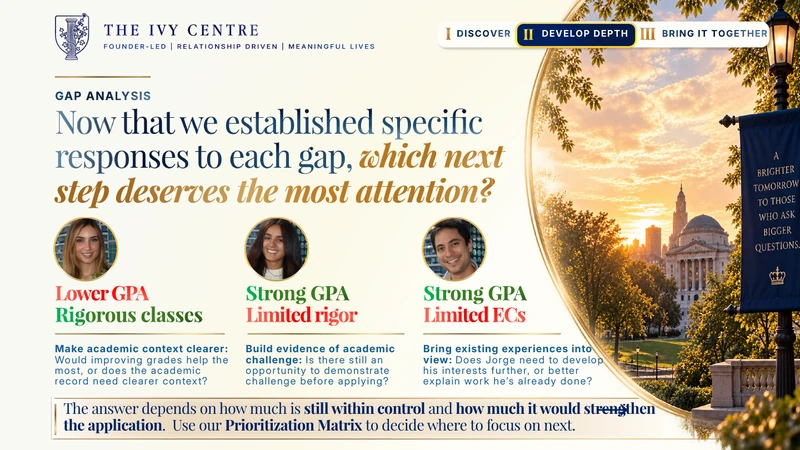 18:5509What can you still change before you apply?
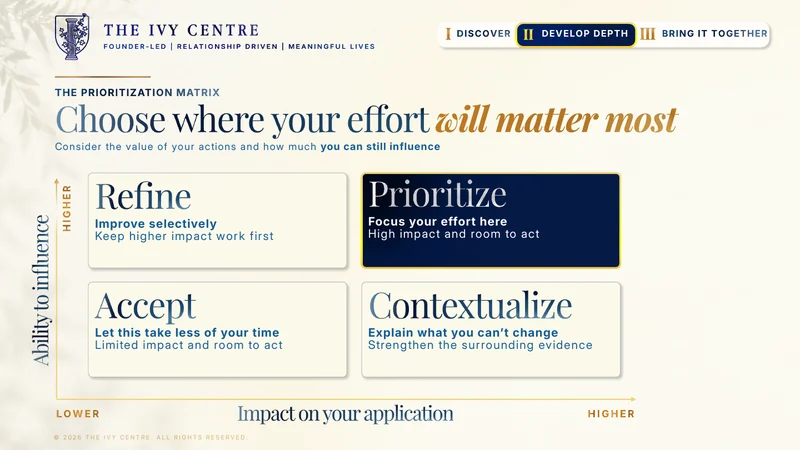 20:2610What deserves your effort, and what can wait?
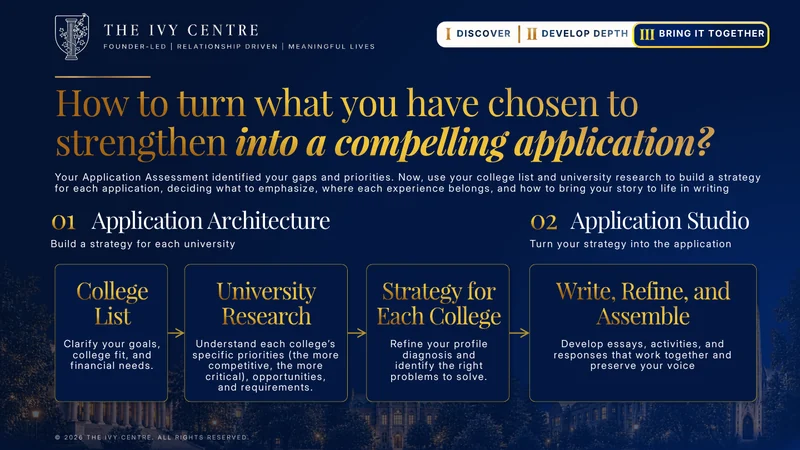 21:3711Why each university needs a different strategy
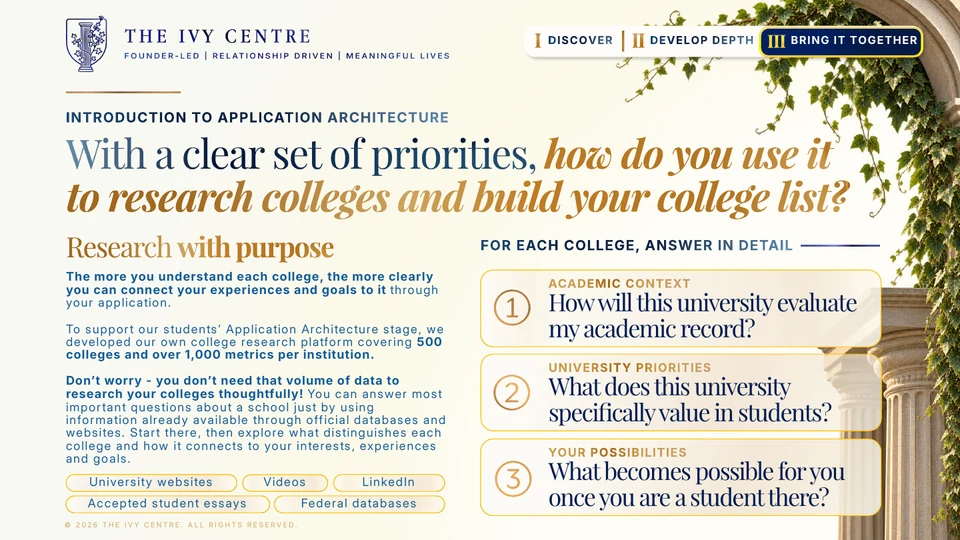 22:3612How to research colleges the right way
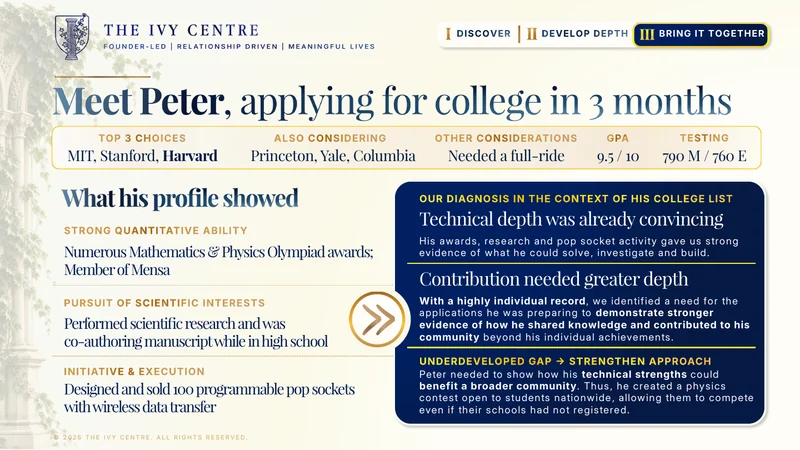 24:4513Peter: Highly technical profile but no differentiator
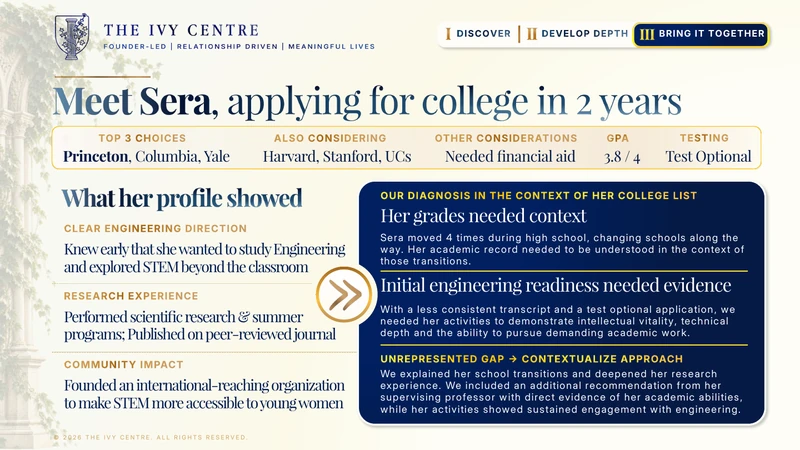 26:3714Sera: Low GPA and SAT, but strong depth in context
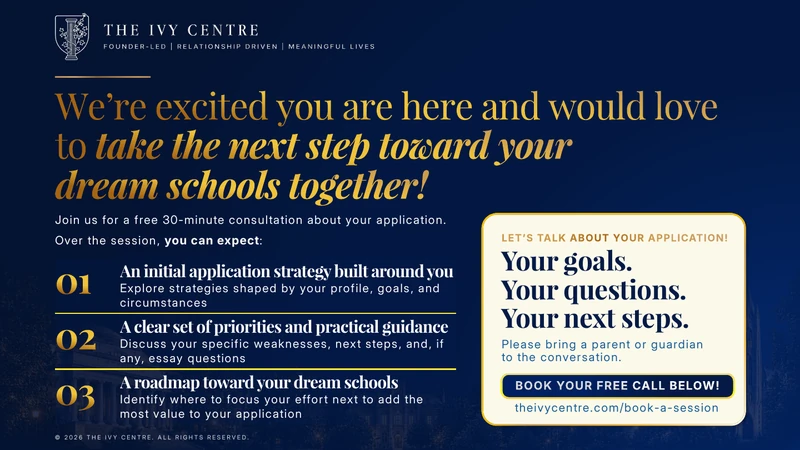 27:5615What should you do next?
Six downloadable resources
Free with masterclass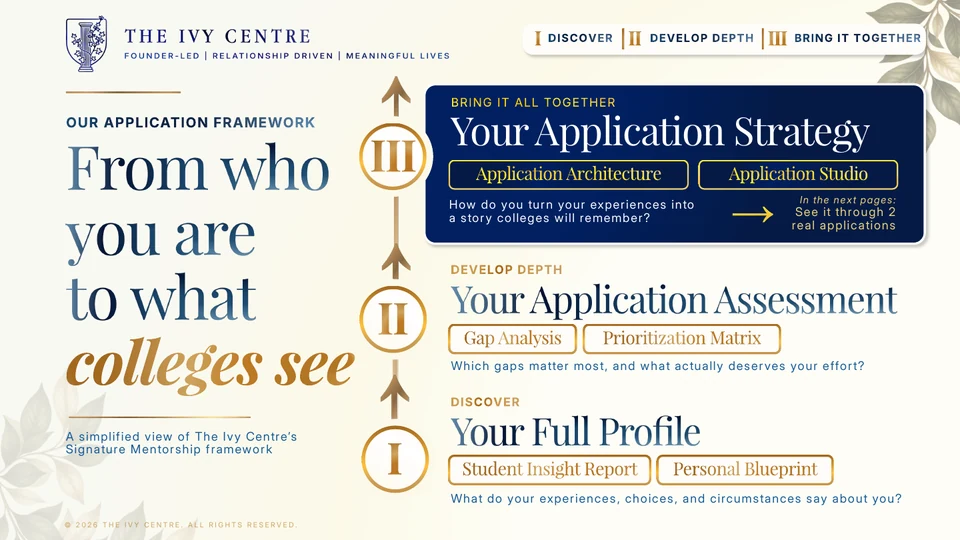 College Application Strategy Map
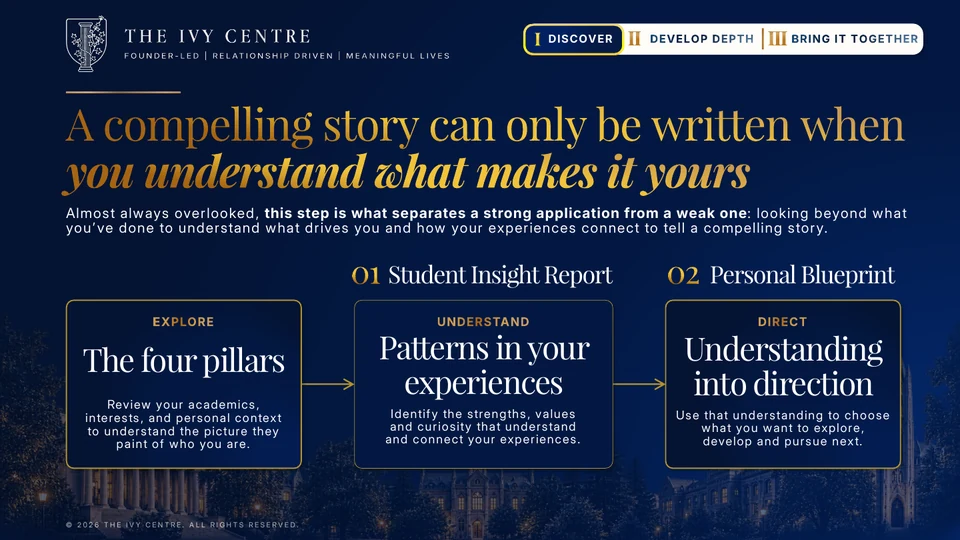 Discover What Sets You Apart
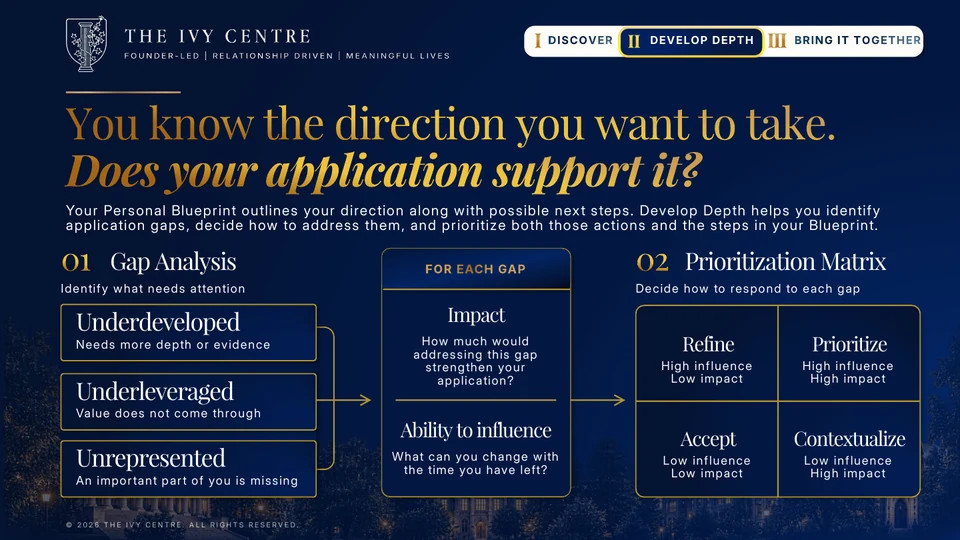 Find and Address Your Specific Application Gaps
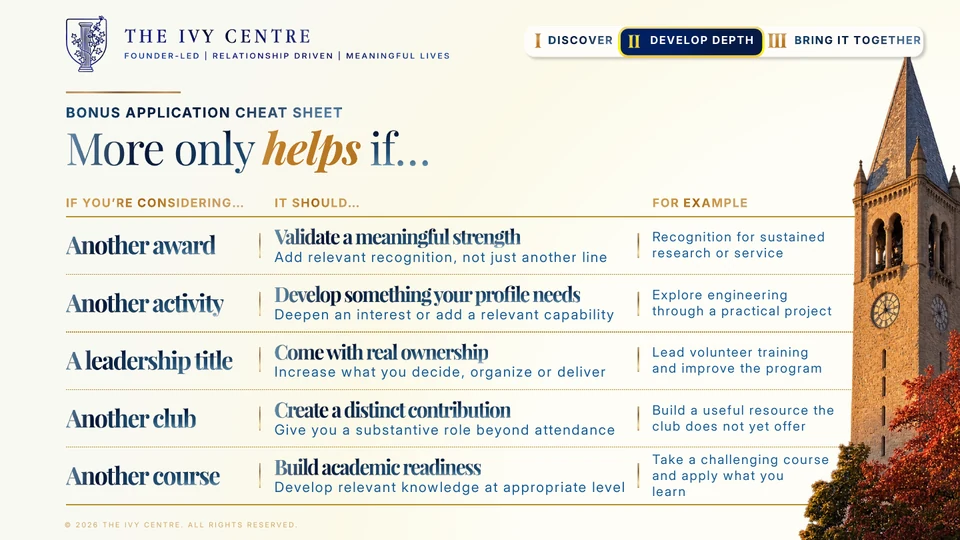 What to Strengthen Next: Your Priorities Cheat Sheet
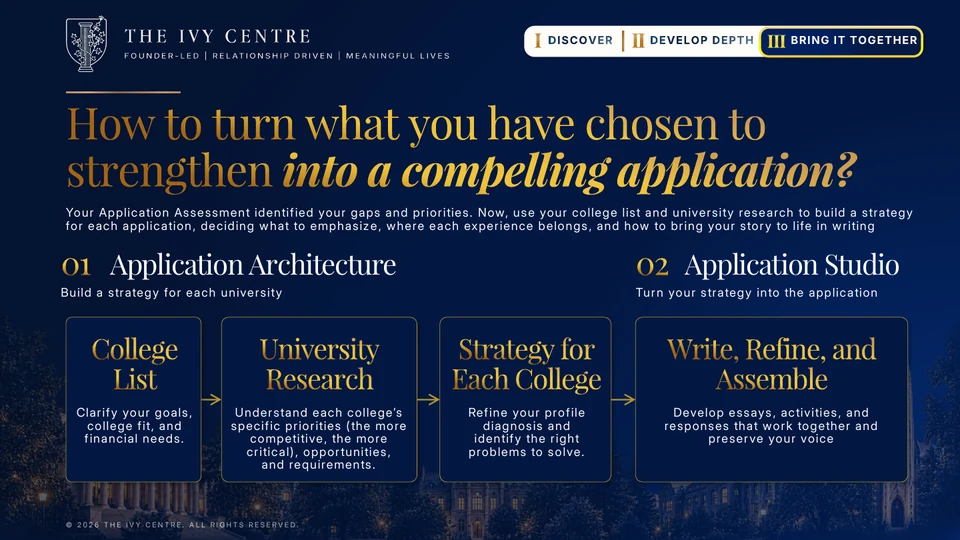 Turn Your Profile into a REALLY Compelling ApplicationHow to Research Colleges and Shape Your Strategy for Each
All 15 chapters and six guides are included with free access and also shared with you over email.
Explore the free masterclassChoose the version for you. Free access, with no commitment to mentorship.
Reviewed by Jorge Dorantes, MD for The Ivy Centre. Our program descriptions draw on our published mentorship framework and masterclass. Linked external sources support the specific comparisons identified in this guide. Illustrative examples are labeled; individual outcomes are not predictions.